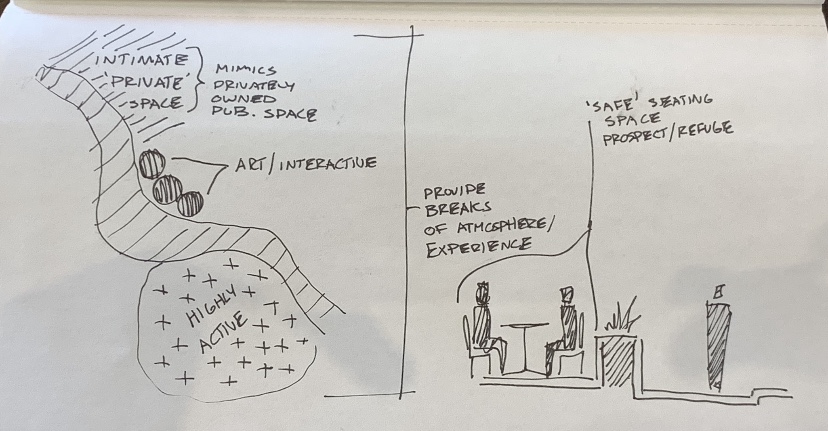
This week I read an article about the importance of privately owned public plazas in urban spaces. The article talks about the recent development boom in Denver and how the existing public infrastructure is under strain because of the use increase. The article states that about 30% of public urban space is privately owned and is vital to the health and connectivity of the urban fabric. The article also talks about William Whyte’s work and studies related to urban spaces and gives reference to a particular New York plaza that he studies in “Social life of Small Urban spaces”. There was a push to build up in New York in the 70’s and 80’s. City planners created incentives to increase the amount of public space and sunlight present on the street level by allowing developers to build higher if they set back their building from the street and added small plazas. This type of plaza is super important because they are more likely to directly interact with the street, creating a more vibrant streetscape. They are also important because they tend to be more intimate/quiet spaces that give pedestrians a rest from the hustle and bustle of the city. The article states that the main drawback to privately owned, public space is that they are subject to change more rapidly by developers and building owners. Because they are privately owned and those incentives they were built with are no longer applicable, there is no legal obligation to maintain and perpetuate this type of space. This could have potentially devastating effects on neighborhoods that rely on these type of spaces, furthermore, although they are privately owned spaces, they benefit the public and should be highly valued and maintained.
 Scroll Down.